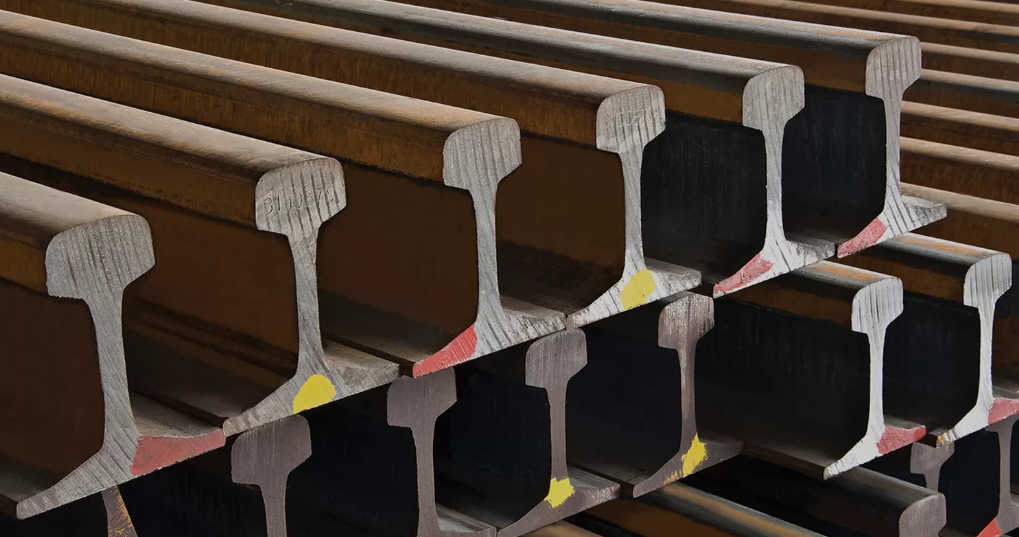
Crane rails are an important component in numerous industrial processes, offering a secure and solid track for cranes to transport heavy loads with accuracy. Crane rails are specially fabricated to support heavy loads and withstand wear and tear, providing smooth operation in manufacturing facilities, ports, shipyards and construction. Understanding the different types of crane rails and their applications can help businesses select the best rail system for their needs.
Types of Crane Rails
1. Light Crane Rails
Light crane rails are mostly employed for lighter loads and less demanding operations. They find applications in warehouses, workshops, and assembly-line applications. They are employed in supporting light overheard cranes that transport loads over short travels.
Key Features:
- Suited for light and moderate loads
- Employed within indoor industrial locations
- Simple setup and maintenance
- Affordable with flexibility in being able to use different layouts
Common Applications
- Warehouses
- Automotive manufacturing units
- Small-scale production facilities
- Food processing plants
2. Heavy-Duty Crane Rails
Industrial duty crane rails are designed for areas that have excessive loads and extreme wear conditions. Heavy-duty rail uses are utilized in steel mill environments, shipyards, and container terminals for massive gantry and overhead cranes.
Key Features:
- High load-bearing capacity
- Made of high-strength steel to resist wear
- Suitable for extreme environmental conditions
- Designed to support long-span crane operations
Common Applications:
- Ports and shipyards
- Steel mills
- Large construction sites
- Cement and concrete plants
3. Grooved Crane Rails
Grooved crane rails have a unique groove pattern that provides improved alignment and load distribution. They find extensive use in high-precision installations where little deviation in crane movement is needed.
Key Features:
- Enhanced guidance for crane wheels
- Reduced lateral movement and wear
- Ideal for high-precision industries
- Increases stability and operational efficiency
Common Applications:
- Aerospace manufacturing
- Railways and transportation hubs
- High-tech industrial plants
- Precision machinery assembly lines
4. Flat Crane Rails
Flat crane rails are a standard option for heavy machinery operations. These rails provide a stable and wide track surface, making them suitable for overhead and gantry cranes in heavy-duty environments.
Key Features:
- Strong and durable design
- Suitable for large overhead cranes
- Provides a stable base for long-distance travel
- Enhanced resistance to deformation under extreme loads
Common Applications:
- Power plants
- Mining operations
- Bulk material handling
- Industrial processing plants
5. Curved Crane Rails
Curved crane rails are specifically designed for curved tracks. They enable cranes to travel along curves smoothly and are best suited for facilities with intricate layouts.
Key Features:
- Made for curved routes
- Demands accurate installation
- Typically used in specialty industrial applications
- Facilitates effective space use in tight facilities
Common Applications:
- Railway workshops
- Custom industrial production units
- Large material handling systems
- Automotive assembly lines
6. Vignole Crane Rails
Vignole crane rails, or standard railway rails, are occasionally modified for crane use. The flat-bottomed structure of these rails is commonly employed in light commercial and industrial applications.
Key Features:
- Lightweight and simple to install
- Utilized in hybrid rail-crane configurations
- Designed for use with different types of cranes
- Supports straight as well as curved track designs
Common Applications:
- Industrial railway systems
- Small-scale lifting operations
- Logistics centers
- Material transfer systems
Materials Used for Crane Rails
Crane rails are manufactured using high-strength materials to withstand heavy loads, impact forces, and extreme environmental conditions. The most commonly used materials include:
1. Carbon Steel
Carbon steel is also extensively utilized in the production of crane rails because of its strength, durability, and cost-effectiveness. It offers superior resistance to wear and deformation under load.
Advantages:
- High tensile strength
- Cost-effective
- Good wear resistance
- Good wear resistance
2. Alloy Steel
Alloy steel crane rails have additional elements such as chromium, manganese and molybdenum to improve their strength and hardness. They suit applications where high durability and shock resistance are required.
Advantages:
- Enhanced hardness and toughness
- More wear and corrosion resistance
- Perfect for high impact situation
3. Stainless Steel
Stainless steel crane rails are used in environments where corrosion resistance is a priority, such as marine applications, chemical plants, and food processing industries.
Advantages:
- Excellent corrosion resistance
- Long lifespan with minimal maintenance
- Suitable for harsh environmental conditions
4. Heat-Treated Steel
Heat-treated steel rails are processed through quenching and tempering to enhance their mechanical properties mechanically. Such rails have better hardness and abrasion resistance, providing them with suitability for extreme industrial uses.
Advantages:
- Higher load-carrying capacity
- Better resistance to deformation
- Increased service life
Uses of Crane Rails
Crane rails find extensive usage in industries where frequent lifting and moving of heavy loads is a common activity. Some of the most prominent industries that make use of crane rails for effective operations are listed below:
1. Ports and Shipyards
Ports and shipyards need heavy-duty crane rails to facilitate the transportation of large container cranes. Such rails have to be resistant to saltwater exposure, heavy repetitive loads, and constant operation.
2. Steel and Metal Industries
In metal processing plants and steel mills, overhead cranes are dependent on long-lasting rails to move molten metal and heavy steel parts efficiently and safely. The rails need to be able to handle extreme loads, corrosive conditions, and high temperatures.
3. Construction and Infrastructure
Crane rails are crucial in large construction projects where tower cranes and gantry cranes assist in lifting heavy materials like steel beams, concrete blocks, and machinery. The durability of these rails ensures safety and efficiency on construction sites.
4. Warehousing and Logistics
Warehouses and distribution centres use crane rails for automated lifting systems, ensuring smooth material handling and inventory management. These rails enable the efficient movement of goods and reduce manual labor.
5. Mining and Heavy Industries
Mining operations require robust crane rails to handle extreme loads, harsh environmental conditions, and continuous operations. These rails facilitate the transportation of extracted minerals and heavy mining equipment.
6. Automotive and Aerospace Manufacturing
Accuracy and efficiency are paramount in the auto and air industries, where there is specialized crane rail used for the transportation of parts and equipment. These rails are implemented in production lines, aircraft assembly, and test labs.
7. Power Generation Plants
Power plant crane rails help in the movement of turbines, generators, and heavy equipment needed for installation and maintenance. They are important in providing smooth operations in hydroelectric, thermal, and nuclear power plants.
8. Chemical and Petrochemical Sectors
Chemical and petrochemical plant crane rails are used to resist corrosion and heavyweight. They move raw materials, chemical containers and reactor pieces.
Conclusion
Selecting the correct kind of crane rail is important for safe, effective, and cost-efficient operations in different industrial sectors. It may be light crane rails used for warehouse usage or heavy-duty rails used for shipyards and steel mills; all types of rails have their specific functions for increased productivity. If one understands the various types, materials, and uses of crane rails, businesses can make appropriate choices to improve their lifting and material handling activities.