
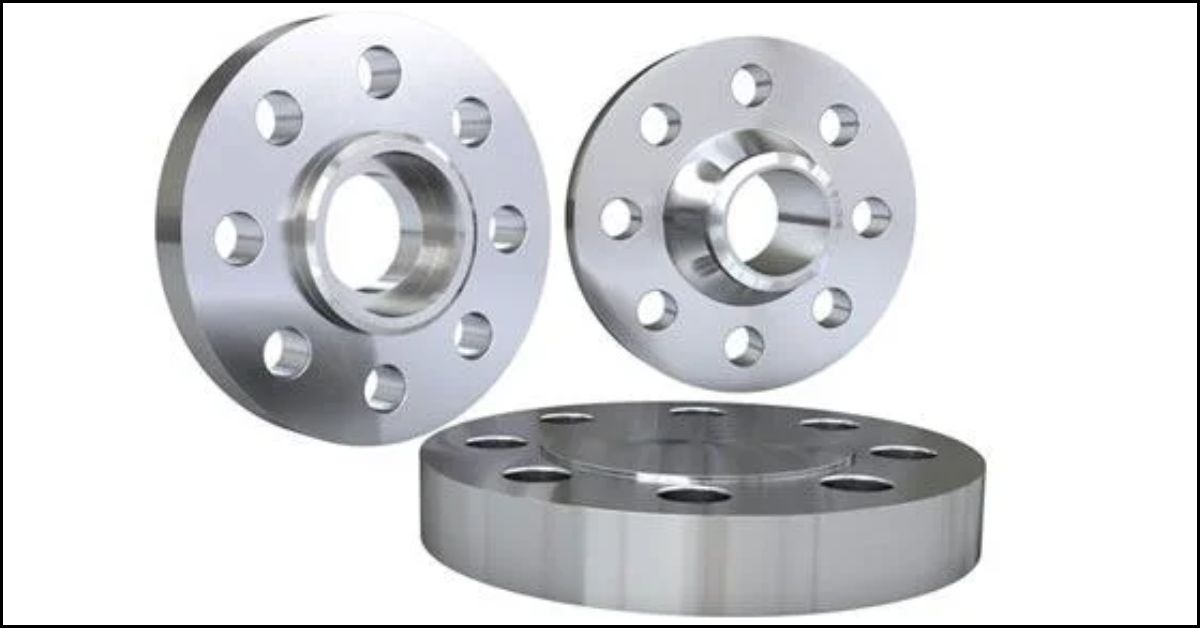
Stainless steel 304 and 304L flanges are key parts of modern piping systems. They help connect pipes, valves, pumps, and other tools. These flanges are preferred as they don’t rust, are easy to weld, and stay strong. They are used in many industries, from food plants to oil refineries because of these properties. They are widely used because of their reliability. Stainless steel handles moisture, heat and pressure well. SS 304/304L flanges also work with many pipe sizes and pressure classes. This makes them a common choice for engineers and plant operators.
What Are Stainless Steel 304/304L Flanges?
Flanges are metal rings that hold together pieces of pipe. They make it easy to assemble, take apart and fix piping systems. Stainless steel 304 and 304L flanges are made from austenitic stainless steel, along with chromium and nickel. The carbon content in SS 304 and SS 304L makes them different from each other. 304L has less carbon. This makes weld decay less likely. It also helps prevent weld joints from rusting. Both grades depend on chromium for rust resistance and nickel for strength and toughness. These flanges are usually made in compliance with the ASTM A182 F304 and F304L standards. These standards control chemical composition, strength and quality.
Chemical Composition and Mechanical Properties
Stainless steel 304 and 304L flanges share similar chemistry and strength. The key difference is carbon level, which affects welding performance. Below is a simple comparison of their main properties.
| Property | SS 304 | SS 304L |
| Chromium | 18–20% | 18–20% |
| Nickel | 8–10.5% | 8–10.5% |
| Carbon | Up to 0.08% | Up to 0.03% |
| Tensile Strength | ~515 MPa | ~485 MPa |
| Yield Strength | ~205 MPa | ~170 MPa |
| Temperature Use | Up to 870°C | Up to 870°C |
Both grades perform well in normal and high-temperature service. SS 304L is preferred when heavy welding is involved.
Types of Stainless Steel 304/304L Flanges
SS 304/304L flanges come in many types to suit different system needs. Each type serves a clear purpose in piping design.
- Weld Neck Flanges: Weld neck flanges are used in systems that have a lot of pressure and heat. They have a long tapered hub that distributes stress evenly. Over time this design reduces the risk of fatigue and cracks. In critical service lines, they are very common.
- Slip-On Flanges: Slip-on flanges slide over the pipe and are welded in place. They are easy to align and install. These flanges suit low to medium pressure systems. They are often used where cost control matters.
- Blind Flanges: Blind flanges close the end of a pipe or vessel. They allow future system expansion or inspection. These flanges handle pressure well and are useful during testing. Maintenance work becomes easier with blind flanges.
- Socket Weld Flanges: Socket weld flanges are used for small pipe sizes. The pipe fits into a socket before welding. This gives good strength in compact systems. They are used in high-pressure but small-diameter lines.
- Threaded Flanges: Threaded flanges screw onto pipes without welding. They are used in low-pressure systems. These flanges work well where welding is not possible. Maintenance and removal are simple.
Applications of SS 304/304L Flanges
SS 304/304L flanges are used across many industries. Their clean surface and strength make them reliable in harsh settings.
- Oil and Gas Industry: These flanges connect pipelines in refineries and processing units. They are also used on offshore platforms. Their corrosion resistance helps in wet and salty conditions.
- Chemical and Petrochemical Industry: SS 304/304L flanges work well with fluids that are mildly corrosive. They are used in tanks, reactors and networks of pipes. Their strength keeps them working well, even when there is a lot of pressure.
- Food and Beverage Industry: These flanges are suitable for food plants as they have clean surfaces. They are used in systems for making beer and dairy products. Stainless steel is good for hygiene and is easy to clean.
- Pharmaceutical Industry: Pharma plants need clean and safe connections. SS 304/304L flanges help avoid contamination. They meet strict quality and safety needs.
- Power Plants and Heat Exchangers: These flanges perform well under heat and pressure. They connect pipes in boilers and heat exchangers. Long service life is a key benefit here.
Benefits of Using Stainless Steel 304/304L Flanges
Stainless steel 304 and 304L flanges offer clear advantages in daily operation. These benefits support long-term system reliability.
- Excellent corrosion resistance: They resist rust in moist and mild chemical settings. This helps protect piping systems in long-term service.
- Superior weldability (especially 304L): Low carbon reduces cracking near welds. This improves joint strength and lowers repair risk.
- High strength and durability: They handle pressure and heat without loss of shape. This ensures stable performance under load changes.
- Low maintenance requirements: Smooth surfaces reduce cleaning and repair needs. This helps cut downtime and service costs.
- Long service life: They last longer than many carbon steel options. This reduces the need for frequent replacements.
- Cost-effective for general-purpose applications: They balance price with performance. This makes them suitable for many standard industries.
Stainless Steel 304 vs 304L Flanges – Key Differences
SS 304 and 304L flanges look similar but behave differently in service. The main factor is carbon content and weld behavior.
| Feature | SS 304 Flanges | SS 304L Flanges |
| Carbon Content | Higher | Lower |
| Weld Corrosion Risk | Moderate | Very low |
| Post-Weld Heat Treatment | Sometimes needed | Often not needed |
| Best Use | General service | Heavy welded systems |
SS 304 suits non-critical welds. SS 304L is better for large welded piping.
Standards, Dimensions, and Pressure Ratings
SS 304/304L flanges follow strict global standards. ASTM A182 covers material grade and quality. ASME B16.5 and ASME B16.47 define flange size and shape. They are available in ANSI pressure classes like 150, 300, 600, and higher. This allows use in both low and high-pressure systems.
How to Choose the Right SS 304/304L Flange
Choosing the right flange avoids future issues. Consider these key points before selection:
- Check operating pressure and temperature limits: Make sure the flange’s pressure class (for example, Class 150 or 300) can handle the system’s heaviest load. This is because the strength of the material reduces as the temperature increases.
- Review the corrosion level of the fluid: Ensure that the fluid is chemically compatible with 304 stainless steel. Remember that 304L is better at resisting intergranular corrosion in tough conditions.
- Decide if welding is required: If you plan to weld the flange choose 304L because it has a low carbon content that stops “carbide precipitation.” This can make the joint weaker and cause rust.
- Confirm industry standards and certificates: To ensure safety and fit, check that the flange meets certain regulations, such as ASME B16.5 (dimensions) or ASTM A182 (material quality).
Stainless steel 304 and 304L flanges play a vital role in industrial piping systems. Their corrosion resistance, strength, and ease of use make them a trusted choice. Industries rely on SS 304/304L flanges for safe and stable connections. These products can be used in different ways as they come in a lot of different flange types. They work well all the time, from food plants to oil fields. Choosing the right grade and design helps make sure that the system lasts a long time and is safe.


