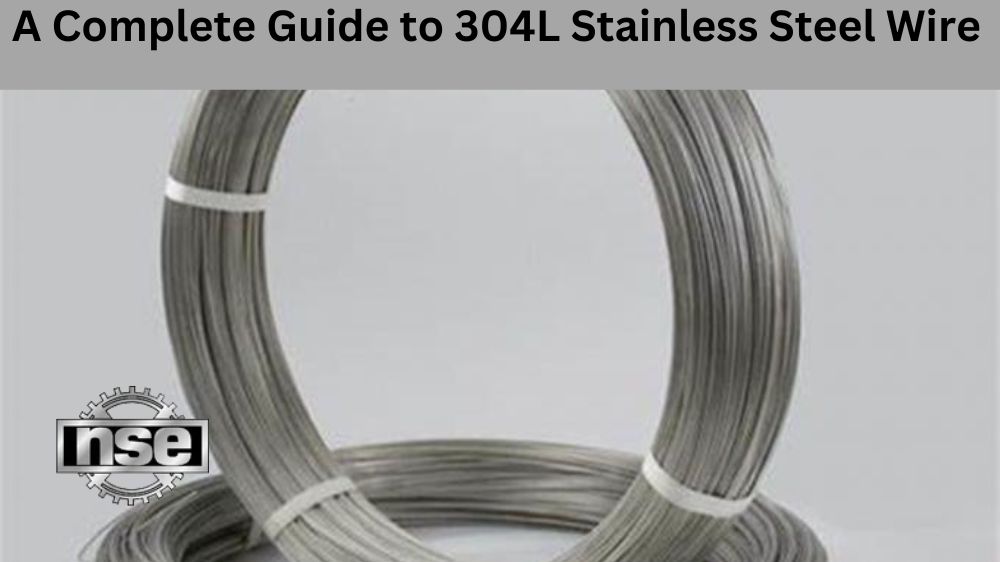
Stainless steel wire is widely used in various industries for its excellent corrosion resistance and durability. Among all the grades of stainless steel, 304L is one of the most popular and versatile. It is a low-carbon variation of 304 stainless steel, which is more suitable for welding and high-temperature applications. This blog post will provide a complete guide to 304L stainless steel wire to understand its properties, applications, and specifications.
What is 304L Stainless Steel Wire?
304L Stainless Steel Wire is a type of steel wire composed of 19-22% chromium, 8-11% nickel and 0.03 max carbon. It has excellent flexibility and strength properties, making it ideal for industrial and commercial purposes. It is highly corrosion-resistant even in very acidic environments, making it an ideal material for architectural applications such as railings, handrails, expansion joints, etc. The unique combination of its mechanical properties and corrosion resistance also makes it suitable for food processing equipment used in restaurants, breweries, etc.
Properties of 304L Stainless Steel Wire
The main features of 304L stainless steel wire are its high corrosion resistance, excellent weldability, and good ductility. 304L stainless steel wire has a low carbon content, which makes it less susceptible to intergranular corrosion after welding. Additionally, it exhibits good formability, making it easy to shape and bend. It is also non-magnetic and has a high tensile strength.
Applications of 304L Stainless Steel Wire
304L stainless steel wire is widely used in various industries due to its excellent properties. Some of the most common 304L stainless steel wire applications include welding wire, springs, fasteners, medical devices, and food processing equipment. Its corrosion resistance makes it ideal for chemical, petrochemical, and pharmaceutical industries. It is also used in the construction of buildings and bridges due to its high strength and durability.
Specifications of 304L Stainless Steel Wire
304L stainless steel wire is available in various sizes and shapes to meet different requirements. It is typically available in diameters ranging from 0.1 mm to 12.0 mm. The wire can be supplied in straight lengths or coils. The ASTM A580 specification defines the standard specification for stainless steel wire. The standard specifies the chemical composition, mechanical properties, and tolerances for the wire.
Fabrication of 304L Stainless Steel Wire
304L stainless steel wire can be easily fabricated using standard methods. It can be welded using TIG, MIG, or spot welding techniques. However, using low heat input during welding is recommended to avoid carbide precipitation and loss of corrosion resistance. The wire can be easily formed and bent using standard tools. For best results, manufacturers should use high-quality tools with sharp edges.
Maintenance of 304L Stainless Steel Wire
To maintain the corrosion resistance of 304L stainless steel wire, it is essential to keep it clean and free from contaminants. Regular cleaning with mild soap and water is recommended. Avoid using abrasive cleaning agents or tools that can scratch the surface of the wire. Additionally, avoid exposure to harsh chemicals and high temperatures that can damage the wire.
Conclusion
In conclusion, 304L stainless steel wire is an excellent choice for various applications due to its high corrosion resistance, good weldability, and ductility. Its versatility makes it suitable for use in the chemical, petrochemical, pharmaceutical, and food processing industries, as well as construction and medical equipment applications. When using 304L stainless steel wire, following the recommended fabrication and maintenance practices is essential to maintain its properties and ensure optimal performance.